
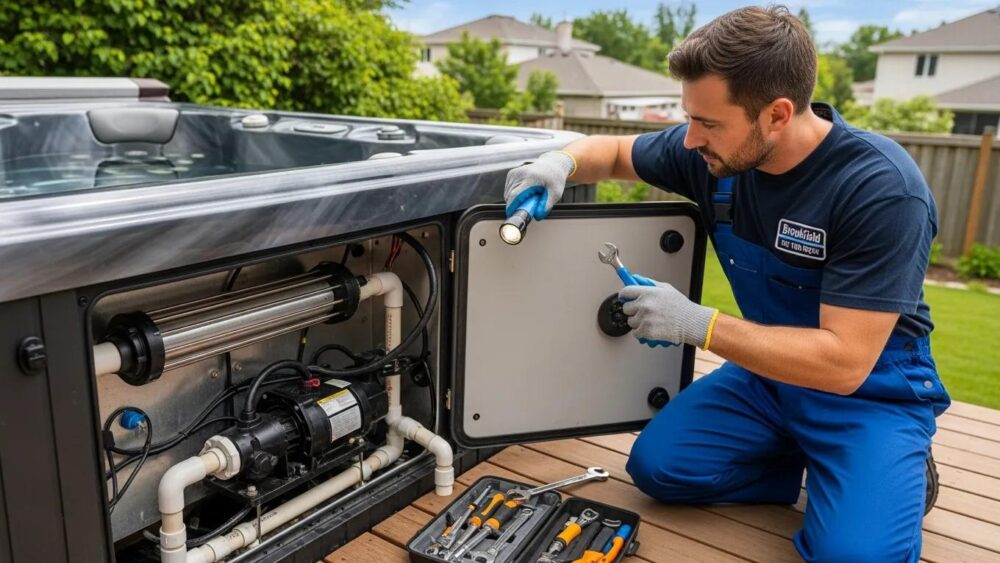
,Trusted Hot Tub Repair in Brookfield
Your hot tub should be a place to relax, not a hassle. When heaters, pumps, or electrical components fail, it interrupts that peace. This guide walks through the common issues we see in Brookfield and how to diagnose and repair them. You’ll find clear steps for heater problems, pump diagnostics, electrical troubleshooting, circulation issues, and filter care so your spa stays ready when you are.
Why Isn't My Hot Tub Heater Working and How Can I Fix It?
A cold hot tub is one of the quickest ways to ruin a soak. Heater failures usually come from a few common causes — chemical imbalance, leaks, or low water flow — and each needs a different fix. Spotting the right cause early helps you get warm water again faster and avoids bigger repairs.
Common Causes of Hot Tub Heater Failure in Brookfield
Several things can stop a heater from doing its job. Strong or unbalanced water chemistry can corrode heater elements and controls. Plumbing or heater leaks can lower water levels and prevent proper operation. And low flow — often from clogged filters or a failing pump — keeps water from circulating through the heater. Catching these signs early makes repairs simpler and less costly.
Step-by-Step Spa Heater Repair Procedures
Start by testing and balancing the water chemistry to prevent further damage. Inspect the heater and adjacent plumbing for visible leaks or corrosion. Clear or replace clogged filters and verify the pump is providing adequate flow. Tighten fittings and repair any leaks you find. If the heater still won’t heat, schedule a professional diagnostic so a technician can test elements, sensors, and controls safely.
A quick look at hot water temperature maintenance systems can offer helpful context for improving spa heater care and efficiency.
For expert advice or services to keep your spa clean and well-maintained, visit Leisure Pools & Spas‘ page Spa Cleaning & Maintenance.
Optimizing Hot Water Temperature Systems & Spa Heater Care
HWTM systems are designed to keep hot water at fixtures with minimal wait by reducing standby heat loss in idle pipe runs. Many commercial setups recirculate water back to the heater to maintain temperature, and other HWTM approaches are available as well. These systems help maintain consistent temperatures, reduce heat loss, and shorten delivery time to fixtures. The referenced resource summarizes HWTM options and highlights key considerations for occupant safety, comfort, and maintenance practices to keep systems running efficiently.
Domestic Hot Water Temperature Maintenance Technology Review, KLM Stoughton, 2020
How to Diagnose and Fix Spa Pump Problems in Brookfield
Spa pump problems often show up as poor circulation, reduced heat, or leaks. Correct diagnosis begins with observing symptoms and working through straightforward checks. Addressing pump issues quickly prevents damage to the heater and plumbing and keeps your spa performing well.
Identifying Symptoms of Spa Pump Malfunctions
Low water flow can point to a clogged filter or a failing pump. If your hot tub won’t heat, that may mean the pump isn’t moving water through the heater. Look for visible leaks or unusual noises from the pump housing, which indicate seals or bearings may be failing. Early detection saves time and money.
Effective Spa Pump Repair Techniques and Maintenance
Begin with regular visual inspections to catch wear and leaks early. Clean or replace filters to restore flow. Check fasteners and plumbing connections for tightness, and inspect the pump lid and seals for damage. Routine maintenance — like flushing lines, changing worn seals, and replacing bearings — extends pump life and reduces unexpected breakdowns.
What Are the Best Practices for Hot Tub Electrical Diagnostics?
Electrical faults are a top safety concern and can cause the spa to stop functioning. Follow established best practices for safe, accurate diagnostics: use the right tools, confirm chemical balance, and involve a licensed electrician for anything beyond basic checks.
Tools and Methods for Electrical Troubleshooting in Hot Tubs
Useful tools include a multimeter for voltage and continuity tests, a GFCI tester for ground-fault protection checks, and a water test kit to confirm chemistry isn’t contributing to failures. Systematic checks of breakers, contacts, wiring, and control boards help pinpoint electrical issues so they can be fixed correctly.
Ensuring Safety During Hot Tub Electrical Repairs
Safety is the priority. Always switch off and lock out power at the breaker before inspecting electrical components. Wear appropriate protective gear and avoid working on energized circuits. If you’re unsure, call a certified technician or electrician — electrical repairs should meet local codes and protect users from shock risk.
How to Resolve Spa Water Circulation Issues Efficiently?
Good water circulation keeps temperature even and water chemistry stable. When circulation falters, the result can be cloudy water, cold spots, and extra strain on equipment. Understanding common causes and simple maintenance steps will get your spa flowing properly again.
Causes of Poor Water Circulation in Hot Tubs
Poor circulation is usually caused by clogged or dirty filters, a failing pump, blocked suction lines, or improperly balanced water that creates foam and restrictions. Restrictions at the skimmer, clogged pipes, or closed valves also reduce flow. Identifying the exact cause lets you fix it without unnecessary parts replacement.
Maintenance Tips to Improve Spa Water Flow
Keep filters clean and replace them when they show wear. Inspect the pump and plumbing for debris, blockages, or leaks. Verify that all valves are open and that jets aren’t obstructed. Regular water testing and balancing prevent scale and buildup that reduce flow. These simple steps help maintain steady circulation and extend equipment life.
What Does Hot Tub Filter Cleaning Service Include in Brookfield?
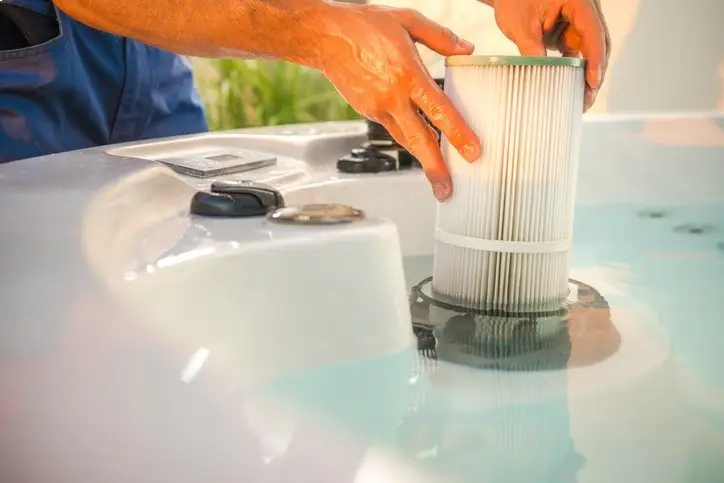
Clean filters are central to water clarity and system health. A professional filter cleaning service goes beyond a quick rinse to remove oils, scale, and embedded debris so your spa runs more efficiently and lasts longer.
Importance of Regular Filter Cleaning for Hot Tub Health
Regularly cleaned filters keep water clear and put less strain on the pump and heater, which improves efficiency and reduces repair needs. Removing trapped debris and oils also prevents bacteria buildup and helps sanitizers work properly, keeping your spa safe and inviting.
Stepwise Guide to Professional Hot Tub Filter Cleaning
During a professional cleaning, the technician removes and inspects the filter for damage, soaks it in a specialized cleaner to dissolve oils and scale, rinses it thoroughly, and then reinstalls and tests the system. This process restores flow and extends filter life compared with rinsing alone.
How Much Does Hot Tub Repair and Diagnostics Cost in Brookfield?
Repair and diagnostic costs depend on the work required, parts, and travel. Use the table below as a general guide — exact pricing will vary by job and site conditions.
Average Pricing for Heater, Pump, and Electrical Repairs
| Service Type | Cost | What’s Included |
|---|---|---|
| First Hour (includes diagnostic fee) | $200.00 | Initial assessment and diagnosis of issues. No Trip Charge within 10 miles. |
| Service Fee (no diagnosis needed) | $155.00 | General service without diagnostic requirements. No Trip Charge within 10 miles. |
| Trip Charge | $1.00/mile | Fee for travel to the service location between ten and forty miles. Price per mile may increase beyond forty miles. |
These figures are a starting point to help you budget. Final costs depend on the specific repair, parts required, and any additional labor.
Factors Influencing Hot Tub Repair Costs
Complex repairs, rare parts, and long travel distances increase cost. Labor time and diagnostic difficulty also affect the final price. We recommend getting a written estimate after an on-site inspection so you know exactly what’s involved.
Frequently Asked Questions
What are the signs that my hot tub needs repair?
Watch for inconsistent water temperature, strange noises from the pump or heater, visible leaks, weak jets, or error codes on the control panel. Cloudy or foul-smelling water is a sign of filtration or sanitation problems. Noticing these early helps prevent bigger issues.
How often should I perform maintenance on my hot tub?
Check and clean filters every 4–6 weeks and test water chemistry weekly. Inspect heater, pump, and electrical components every few months, and schedule professional maintenance at least twice a year to catch problems early.
Can I repair my hot tub myself, or should I hire a professional?
Routine tasks like cleaning filters and testing water are fine for most owners. For electrical repairs, heater element replacements, or major plumbing work, hire a qualified technician. Proper tools and experience keep repairs safe and reliable.
What should I do if my hot tub is leaking?
If you find a leak, turn off power at the breaker and stop using the spa. Inspect fittings, seals, and visible plumbing for the source. Small leaks can sometimes be tightened or sealed, but larger leaks or hidden plumbing issues should be handled by a professional to avoid further damage.
How can I improve the energy efficiency of my hot tub?
Keep a well-fitting, insulated cover on the tub to reduce heat loss. Maintain clean filters and good circulation, lower the thermostat when not in use, and use a timer or smart control to run the heater only when needed. These habits reduce energy use and operating costs.
What are the benefits of regular hot tub water testing?
Regular testing ensures pH, alkalinity, and sanitizer levels are balanced, which prevents skin irritation and protects equipment from corrosion or scale. Balanced water also helps sanitizers work correctly, keeping water clearer and reducing the need for costly chemical or component repairs.
About the Author
Leisure Pools & Spas is a family-owned business proudly operated by Pat Reed, his wife Donna, and their son Andy. With years of experience and a commitment to quality service, they ensure every customer receives expert care and personalized attention.
Learn more about their story on the About Us page, and meet the dedicated team on the Meet the Team page.


