
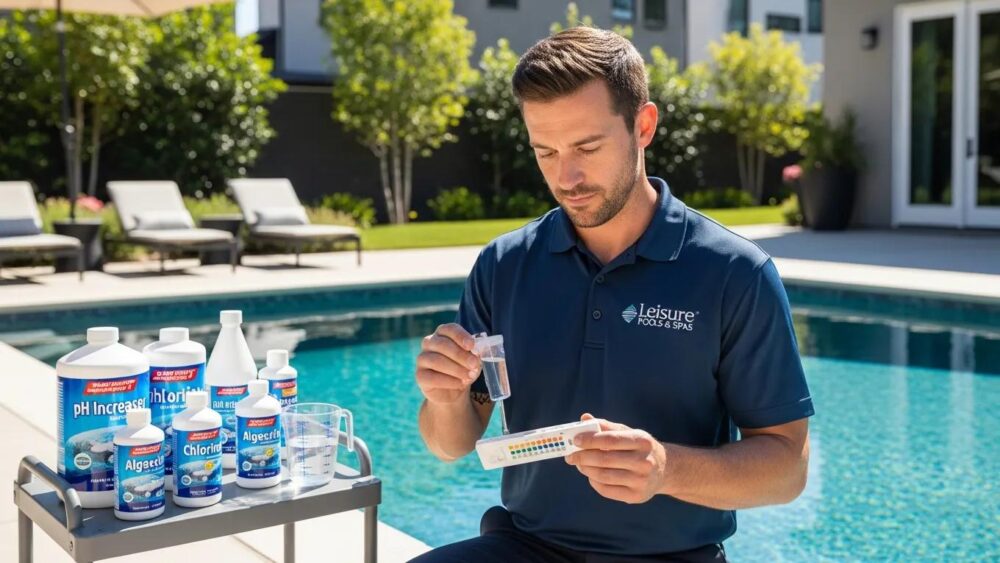
Brookfield Pool Chemical Balancing: Professional Water Testing & Safe Chemical Adjustments
Keeping your pool clean, safe, and swim-ready starts with balanced chemistry. Pool chemical balancing means testing your water and making targeted adjustments so chlorine, pH, alkalinity, and other factors stay where they should. In Brookfield, seasonal changes and variable use make regular testing especially important. This guide walks you through how often to test, which chemicals matter, safe adjustment steps, seasonal care, and the local rules to watch — so your pool stays inviting and healthy all year.
Because pool chemistry can be complex, researchers have created practical tools — like the Swimming Pool Water Quality Index — to simplify monitoring and communicate water quality clearly.
Swimming Pool Water Quality Index (SPWQI): A practical monitoring tool
The SPWQI was developed to turn detailed water-quality data into a single, easy-to-understand score. Built from literature review and expert consensus using the Delphi method, the index combines 13 selected physicochemical and biological parameters, each weighted by importance. The goal: make pool water quality consistent to measure and straightforward to share with the public and decision-makers.
An innovative swimming pool water quality index (SPWQI) to monitor and evaluate the pools: design and compilation of computational model, R Nabizadeh, 2019
How often should you perform pool water testing in Brookfield?
Frequent testing keeps problems small and easy to fix. How often you test depends on use, weather, and how much debris gets in the pool.
Recommended testing frequency for optimal pool water quality
During the primary swimming season, test at least twice a week for reliable chemistry. If your pool sees heavy daily use or hot, sunny weather, test daily until levels stabilize. For lightly used pools, a weekly check is usually acceptable. Relying on monthly testing risks letting imbalances grow unnoticed.
Using automated pool water testing technology for convenience
Automated testers and smart monitors deliver continuous, real-time readings so you catch shifts quickly. These systems reduce guesswork and cut down on manual testing, making it easier to keep chemistry in range with minimal effort.
What are the key pool chemicals and their functions in balancing water?
Each chemical plays a specific role. Knowing what they do helps you prioritize tests and corrections.
Role of chlorine, pH adjusters, and alkalinity agents in pool maintenance
Chlorine is your primary sanitizer — it kills bacteria and controls algae. pH adjusters change how acidic the water feels and how effective chlorine is: use muriatic acid or sodium bisulfate to lower pH, and soda ash (sodium carbonate) or baking soda (sodium bicarbonate) to raise it. Total alkalinity (commonly managed with sodium bicarbonate) buffers pH and prevents sudden swings that can irritate swimmers or damage equipment.
Understanding chlorine stabilization and cyanuric acid levels
Cyanuric acid shields chlorine from sunlight, prolonging its life. Keep cyanuric acid in the recommended range — generally 30–50 ppm — to balance chlorine protection without reducing its effectiveness.
How to safely adjust pool chemicals for balanced water quality?
Always follow safety guidelines and manufacturer directions. Make changes slowly and retest between steps so you avoid overcorrection.
Step-by-step chemical adjustment techniques for Brookfield pools
- Test the water: Start with a trusted test kit or meter to check free chlorine, pH, alkalinity, and any other relevant parameters.
- Adjust pH: If pH is above range, add muriatic acid or sodium bisulfate in measured doses. If pH is low, raise it with soda ash or sodium bicarbonate.
- Balance alkalinity: Raise total alkalinity with sodium bicarbonate as needed. To lower alkalinity, carefully apply an acid according to product instructions.
- Set sanitizer levels: Add chlorine (or your preferred sanitizer) based on test results to return free chlorine to a safe range.
- Retest and confirm: After each adjustment, allow the water to circulate, then retest to confirm levels are within recommended ranges.
Using water testing kits to guide chemical dosing accurately
Good test kits are the cornerstone of safe dosing. Follow the kit’s instructions, record results, and calculate dosages from the manufacturer’s directions. Regular, accurate testing prevents overuse of chemicals and keeps your pool comfortable and clear.
Studies that compare test methods highlight why reliable testing matters — not all kits perform the same under real-world conditions.
Accuracy of Pool Test Kits for Water Chemistry
Reliable chemistry readings protect swimmers and equipment. Comparative studies have evaluated common commercial kits (for example, Taylor, HACH, and ColorQ) to check how accurately they measure Free Available Chlorine (FAC), Total Chlorine (TC), and pH. Knowing a kit’s strengths and limits helps operators and inspectors choose the right tools for consistent results.
Accuracy of swimming pool test kits, 2015
What seasonal pool chemical maintenance is recommended in Brookfield?
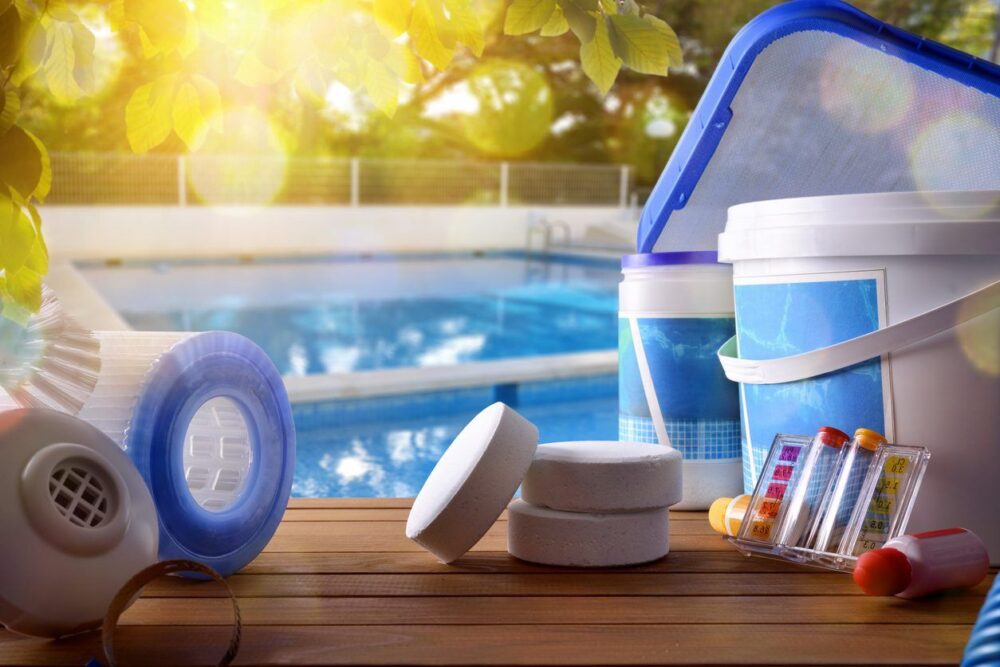
Seasons change how you approach chemistry. Adjust testing and treatment to match usage and local weather trends.
Adjusting chemical levels for summer and winter pool care
In summer, higher temperatures and more swimmers mean more frequent testing and adjustments — aim for at least twice weekly. In winter, if you close the pool, winterize by balancing pH and alkalinity, adding winterizing agents, and protecting equipment to prevent freeze or corrosion damage.
Incorporating eco-friendly chemical alternatives in seasonal maintenance
If you prefer lower-chemical options, consider mineral systems or enzyme-based products. These can reduce chlorine needs and help break down organics while keeping water clear — a good fit for owners focused on environmental impact and gentler maintenance routines.
Which local regulations and safety standards affect pool chemical balancing in Brookfield?
Follow local and state health regulations to stay compliant and keep swimmers safe.
Compliance with Brookfield’s 2024-2026 pool water quality regulations
Brookfield enforces water-quality standards consistent with state and county health guidelines. Requirements typically cover minimum sanitizer levels, regular testing records, and safety equipment. Consult the Wisconsin Department of Health Services and Brookfield’s local health authority for the most current rules and reporting expectations.
Safety tips to ensure regulatory adherence and swimmer protection
Keep written testing logs, run routine safety inspections, train staff or household members on emergency procedures, and post clear pool rules. These small steps support compliance and reduce risk for everyone who uses the pool.
What are common questions about pool chemical balancing services in Brookfield?
Below are practical answers to the questions pool owners ask most often.
How to test pool chemical levels effectively at home?
Use a quality test kit or digital meter and follow the manufacturer’s directions. Test strips are quick for spot checks; liquid reagent kits or electronic testers give more precise results. Test at consistent times and record readings so you can see trends between adjustments.
What chemicals are essential for maintaining safe pool water?
The essentials are a sanitizer (usually chlorine), pH adjusters (acids and bases), and alkalinity control (sodium bicarbonate). Depending on your system, stabilizers (cyanuric acid), clarifiers, and algaecides may also be important. Eco-friendly alternatives can supplement or reduce traditional chemical use when used properly.
Frequently Asked Questions
What are the signs that my pool water is unbalanced?
Cloudy water, visible algae, strong chlorine smell, and swimmer eye or skin irritation are common signs. Any of these should prompt immediate testing — early correction prevents larger, more expensive problems.
Can I use household products to adjust my pool chemicals?
Generally no. Household cleaners and chemicals can introduce impurities or unpredictable reactions. Use products labeled and formulated for pools, and follow dosing instructions closely to protect swimmers and equipment.
How can I prevent algae growth in my pool?
Maintain steady sanitizer and pH levels, keep filtration and circulation running properly, remove debris promptly, and use a preventive algaecide when needed. Regular cleaning and consistent chemistry are the most effective defenses against algae.
What should I do if I accidentally add too much chlorine?
If chlorine rises above safe levels, close the pool to swimmers until levels drop to the recommended range (typically 1–3 ppm for free chlorine). You can dilute the pool with fresh water or use a chlorine neutralizer per product instructions, then retest before reopening.
Are there any eco-friendly options for pool chemical balancing?
Yes. Mineral sanitizers (using copper or silver), enzyme treatments, and advanced filtration can reduce reliance on traditional chlorine. These options can be effective when paired with proper testing and maintenance routines.
How do I winterize my pool to maintain chemical balance?
Start by cleaning the pool and bringing pH, alkalinity, and sanitizer into their recommended ranges. Add winterizing chemicals as directed, lower the water level if required, protect equipment from freezing, and cover the pool securely to keep debris out and limit evaporation.
About the Author
Pat Reed owns Leisure Pools & Spas with his wife, Donna, and son, Andy. Together, they bring years of experience and dedication to providing expert pool care and customer service in Brookfield. To learn more about Leisure Pools & Spas and their team, visit their About Us and Meet the Team page.


