
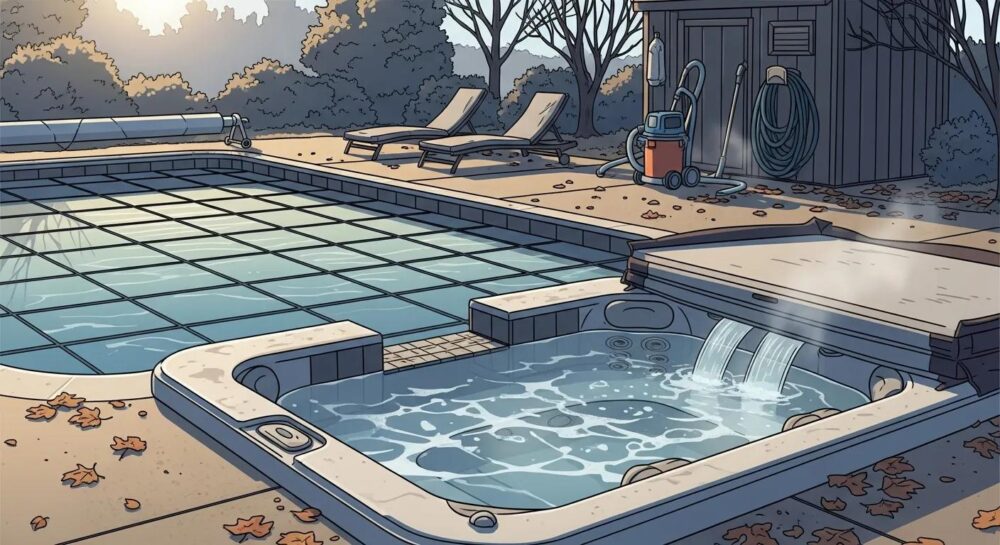
Your Brookfield Guide to Winterizing Pools & Spas
Winter in Brookfield can be tough on pools and spas. Taking the right steps now protects your equipment, saves you money, and makes spring reopening much easier. This guide walks you through practical preparations, equipment care, the chemicals you’ll need, and how local weather affects your plan. Follow these best practices to avoid freeze damage, algae problems, and unexpected repairs.
What Are the Essential Steps to Close Your Pool for Winter in Brookfield?
Closing your pool properly means doing a few key things well. At a minimum, you should:
- Winterize plumbing: Drain and winterize lines so water can’t freeze, expand, and crack your pipes.
- Lower the water level: Drop the level below the skimmer line to reduce ice pressure on fittings and skimmer boxes.
- Apply winter chemicals: Add winter-grade chemicals to keep water clear and stop algae while the pool is dormant.
These steps defend your pool against the freezing temperatures Brookfield gets most winters.
How to Prepare Your Pool Equipment for Winter Protection
Protecting pumps, filters, and heaters is as important as protecting the water. Do these things:
- Blow out and secure lines: Use a blower or shop vac to remove water from plumbing lines, then cap and secure them.
- Lower the water level: Make sure it’s low enough to keep water out of vulnerable skimmer and return areas.
- Winter chemical treatment: Treat and balance the water so algae and scale don’t form while the system is idle.
When equipment is drained, secured, and chemically treated, you’ll reduce the chance of freeze-related failures.
Which Chemicals Are Needed for Proper Winter Pool Care?
Using the right chemicals before closing keeps water stable and prevents problems during storage. The essentials are:
- Winterizing chemicals: Algaecides, shock treatments, and winterizing blends that limit growth and maintain clarity.
- Balanced water chemistry: Adjust pH, alkalinity, and calcium hardness so water stays non-corrosive and protective over the cold months.
Correct dosing and balance at closing make spring cleanup and startup much easier.
How Should You Maintain Your Spa During Brookfield's Winter Months?
Spas have their own needs in winter. Keep them protected with these steps:
- Drain and clean the spa: Empty, scrub, and rinse the shell to remove grime and protect surfaces.
- Freeze-protect plumbing: Insulate pipes and use approved plumbing antifreeze where recommended.
- Periodic checks: If you leave water in, check chemistry and cover fit occasionally to avoid surprises.
Following these practices will help your spa survive winter without damage and be ready when you want to use it again.
What Are the Best Practices for Spa Closing Procedures?
Close your spa the smart way to avoid costly repairs:
- Drain and clean thoroughly: Remove all water, clean filters and surfaces, and let components dry where possible.
- Protect plumbing: Use approved antifreeze in lines if you’re leaving plumbing exposed or at risk of freezing.
- Inspect the cover: Make sure the cover seals well and straps are secure to keep out snow and ice.
Do these steps and your spa will be easier to reopen and less likely to suffer freeze damage.
Which Pool Covers Are Most Effective for Winter Protection in Brookfield?
Picking the right cover depends on safety needs and how you want to protect the water. Common choices are:
- Safety covers: Heavy-duty and secure—these keep debris out and prevent accidental entry.
- Solid covers: Block sunlight to discourage algae and provide strong protection during winter months.
Choose a cover that fits your pool’s shape, your safety priorities, and how much maintenance you want to avoid. For a wide selection of pool covers, visit our showroom pool covers page to find the perfect fit for your needs.
Research shows cover selection depends on your pool’s design and the cover’s intended performance—whether you’re focusing on winter hibernation, year-round protection, or temperature control.
Outdoor Pool Covers for Winter Hibernation
Choosing a pool cover depends on the pool’s architecture and the performance you expect. Options vary widely in cost and function — from covers built for full winter hibernation to those designed to help maintain water temperature year-round.
Technical and Sustainability Analysis of Construction Processes and Covering Systems for Outdoor Swimming Pools, F Farinha, 2023
How to Choose and Install the Right Winter Pool Cover
Install the right cover the right way to avoid wind problems and sagging:
- Pick the cover type: Decide between safety, solid, or mesh based on debris control, safety, and water management.
- Prepare the pool: Clean the pool so the cover sits correctly and won’t trap debris against the shell.
- Install carefully: Follow the manufacturer’s instructions and secure anchors and straps to resist wind and snow loads.
A well-chosen and correctly installed cover offers reliable winter protection.
What Are the Benefits of Advanced Cover Materials and Smart Monitoring?
New cover materials and monitoring tools make winter care easier and more effective:
- Improved safety: Durable materials and secure systems reduce risk from debris and accidental entry.
- Energy savings: Smart monitoring and insulating materials help retain heat and lower heating costs if you keep water warm.
- Lower maintenance: Modern covers and sensors mean fewer manual checks and less seasonal cleanup.
Investing in quality materials and monitoring pays off in convenience and protection.
How Does Brookfield's Local Climate Impact Pool and Spa Winterization?
Brookfield’s winters make thorough winterization necessary. Consider these local factors:
- Extended cold snaps: Long freezes increase the risk of plumbing and equipment damage if not properly protected.
- Freeze-prevention needs: Knowing seasonal patterns helps you choose the right winterization measures and timing.
Tailoring your plan to local weather reduces the risk of winter-related problems.
What Weather Factors Should Influence Your Winter Pool Care Strategy?
Weather should guide what you do and when. Watch for:
- Freezing temperatures: Track forecasts so you can winterize ahead of the first sustained freeze.
- Debris and snowfall: Heavy snow or falling leaves can overload covers—check and remove buildup as needed.
- Chemical stability: Cold weather can change chemistry—make sure levels are balanced before you close.
Planning around these factors helps you avoid common winter pitfalls.
How to Adjust Winterization Steps for Brookfield's Seasonal Variations
Some winters are harsher than others. Adjust your approach by:
- Lowering the water more: In severe winters, drop levels further to protect skimmers and returns.
- Cleaning extra thoroughly: Remove all debris so ice and snow won’t trap organic matter against the surface.
- Changing chemical dosages: Increase or alter winterizing chemicals depending on expected conditions.
Flexibility in your plan protects your pool no matter how the season behaves.
What Are the Cost and Service Options for Professional Winter Pool Care in Brookfield?
| Service | Price | Description |
|---|---|---|
| Basic Winterization | $200 | Includes draining, cleaning, and covering the pool. |
| Full Winterization | $350 | Comprehensive service including chemical balancing and equipment protection. |
| Spa Winterization | $150 | Complete draining and cleaning of the spa. |
These packages provide options whether you want a simple close or a full protective service.
How Much Does Professional Pool Winterization Typically Cost?
Typical pricing depends on service level and pool size. Expect:
- Basic Winterization: Around $200 for essential steps like draining and covering.
- Full Winterization: About $350 for a complete close, including chemicals and equipment care.
Get a local estimate to confirm pricing for your pool’s size and features.
What Services Do Brookfield Pool Winterization Companies Offer?
Local companies usually offer:
- Winterization packages: From basic closes to full service with chemical balancing and equipment prep.
- Ongoing winter checks: Periodic inspections and cover maintenance through the cold months.
Hiring pros can give peace of mind if you’re unsure about DIY winterization. For professional assistance with both winterizing and reopening your pool, check out our detailed pool openings and closings services.
What Are Common Questions About Winterizing Pools and Spas in Brookfield?
Homeowners often ask the same practical questions. Here are clear answers to the most common ones:
- When should I winterize?: Late fall, before the first sustained freeze, is the best time.
- Can I do it myself?: Yes—many owners handle basic winterization. For full protection, especially with complex equipment, professional help is recommended.
- What if I skip winterizing?: You risk broken pipes, damaged equipment, and costly repairs in spring.
Proper timing and technique make all the difference in avoiding winter damage.
When Is the Best Time to Close Your Pool or Spa for Winter?
Close it in late fall, just before the first real freeze. Doing so helps you:
- Prevent freeze damage: Protect lines, pumps, and shells by closing ahead of icy conditions.
- Maintain water quality: Closing early gives you time to balance chemicals properly.
Plan around local weather forecasts to pick the ideal closing date.
How Can You Prevent Winter Damage to Pool Equipment?
Protect equipment with straightforward steps:
- Do a full winterization: Drain and secure plumbing and equipment to stop water from freezing inside components.
- Use winter chemicals: Keep water stable and free of algae while the pool is idle.
- Inspect periodically: A quick winter check can catch small problems before they become big ones.
These precautions greatly lower the risk of winter-related failures.
Frequently Asked Questions
What should I do if I notice ice forming on my pool cover?
Don’t walk on the ice. First, remove loose snow with a soft broom to reduce weight. If water is pooling and freezing, use a cover pump to remove it safely. Monitor the cover and call a pro if the ice seems thick or the cover is under strain.
How can I tell if my pool cover is damaged?
Look for tears, holes, frayed straps, or loose anchors. Check seams and grommets for wear, and see if the cover is sagging or holding water. Any persistent pooling or visible damage means it’s time to repair or replace the cover.
Can I use my pool during the winter months?
Possibly—if you have a heated pool and keep the chemistry balanced. In colder climates, it’s usually safer to close the pool. If you plan to use it, maintain heater and pump functions and check water chemistry frequently.
What are the signs that my spa needs winter maintenance?
Watch for cloudy water, fluctuating temperatures, debris buildup, or unusual noises from the pump or heater. These signs mean it’s time to clean, balance chemicals, and inspect plumbing and equipment for issues.
How can I ensure my winter pool cover lasts for several seasons?
Buy a quality cover, remove debris regularly, avoid standing weight on the cover, and store it clean and dry in summer. Using a cover pump to remove pooled water and checking anchors each season will extend the cover’s life.
What should I do if I forgot to winterize my pool?
Act quickly: assess the pool and equipment, remove any standing water safely, and inspect plumbing for cracks. If ice formed, avoid prying or hitting it—call a professional to evaluate and repair damage before attempting a proper winterization.
About the Author
Leisure Pools & Spas is a family-owned store proudly serving the Brookfield community. Owned and operated by Pat Reed, along with his wife Donna and son Andy, the team brings years of experience and a warm, professional approach to pool and spa care. To learn more about their story and meet the dedicated team, visit their About Us and Meet Our Team pages.


